

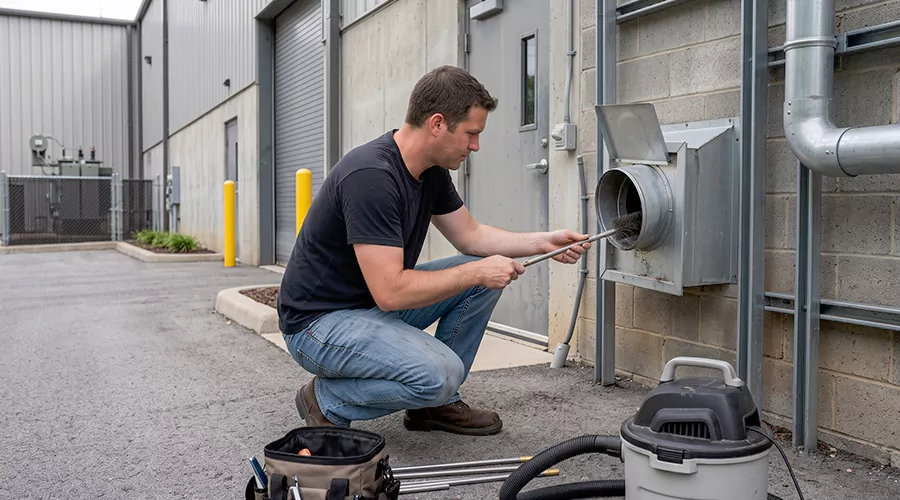
Cleaning a commercial dryer vent involves shutting down the affected equipment, inspecting the complete exhaust system, and removing lint with professional cleaning tools. The process should cover accessible dryer connections, exhaust ducts, elbows, common risers where applicable, and outdoor terminations. Industrial dryer vent cleaning is particularly important in commercial facilities because frequent dryer operation can produce substantial lint accumulation in a relatively short time.
Commercial dryer exhaust systems are found in laundromats, hotels, hospitals, apartment buildings, and other facilities that process large amounts of laundry. Unlike many residential installations, these systems may serve high-capacity tumble dryers or contain long exhaust runs that require specialized access. Some buildings also use engineered common exhaust arrangements with additional equipment that must be maintained according to its design.
Lint is combustible, and restricted exhaust airflow can interfere with the dryer's ability to release heat and moisture. Accumulated fibers can also collect around equipment and surrounding laundry room surfaces. Regular inspection and cleaning are important parts of controlling these hazards while maintaining dependable laundry operations.
The appropriate cleaning procedure depends on the equipment manufacturer and the actual exhaust configuration. A short dedicated duct behind one commercial dryer requires a different approach from a large engineered exhaust system serving multiple units. Identifying the system before cleaning helps prevent damaged connections, incomplete lint removal, and unnecessary equipment downtime.
Why Is Commercial Dryer Vent Cleaning Important?
Commercial dryers can operate for many hours each day, which means substantial quantities of fabric fibers may move through their exhaust systems. Even when staff clean the lint compartments regularly, fine particles can continue into the permanent ductwork. These particles gradually accumulate around connections and bends, particularly when airflow is restricted.
A dirty exhaust can cause longer drying cycles because moist air leaves the machine less efficiently. This may reduce the number of laundry loads that can be completed during normal operating hours. When several dryers are affected, the resulting delays can interfere with a commercial laundry's daily schedule.
Fire prevention is another important consideration. The Occupational Safety and Health Administration identifies accumulated lint in laundry areas and dryer lint traps as a fire hazard. Removing these deposits and following appropriate fire prevention procedures helps control combustible material around heat-producing equipment.
Cleaning also provides an opportunity to identify physical defects. A crushed exhaust connection or damaged exterior damper may continue restricting airflow even after lint has been removed. Correcting those defects is necessary for restoring proper system performance.
Which Businesses Need Commercial Dryer Vent Cleaning?
Any facility operating conventional vented dryers at commercial volumes may need a structured exhaust maintenance program. The frequency and cleaning method depend on equipment use and duct design. Facilities with long exhaust passages or multiple machines can require more involved cleaning than a small shared laundry room.
| Commercial Property | Typical Exhaust Concern | Maintenance Priority |
|---|---|---|
| Laundromats | Frequent use and heavy lint accumulation | Regular lint removal and exhaust inspection |
| Hotels and resorts | Large laundry loads and extended operating hours | Maintain dryer exhaust capacity |
| Hospitals and healthcare laundries | Continuous linen processing | Control lint and equipment overheating |
| Nursing homes | Frequent washing of bedding and clothing | Document scheduled maintenance |
| Apartment complexes | Concealed or vertical duct runs | Clean individual ducts and applicable building systems |
| Student housing | High-volume shared laundry use | Inspect heavily used dryers |
| Fitness centers and spas | Frequent towel drying | Monitor lint buildup and drying performance |
| Commercial laundry facilities | High-capacity dryers and substantial exhaust systems | Equipment-specific preventive maintenance |
A facility with several dryers does not automatically have a shared exhaust duct. Some machines have separate exhaust passages, while certain commercial systems use engineered common arrangements. Those distinctions affect cleaning access and equipment shutdown procedures.
The building's existing maintenance records should identify which ducts serve each appliance. If the configuration is uncertain, it should be investigated before cleaning equipment is inserted into concealed passages.
What Causes Commercial Dryer Vents to Become Clogged?
Lint accumulation is the primary cause of dirty commercial dryer exhaust systems. However, the amount and location of buildup are influenced by laundry volume and the condition of the ductwork. Long passages and poorly installed fittings may allow debris to settle rather than discharge outdoors.
High Laundry Volume
Commercial laundries may operate dryers for extended periods, processing repeated loads of towels and bedding. Each load releases small fabric fibers as clothing tumbles. Although the lint compartment captures much of this material, some particles travel into the exhaust duct.
The amount of lint varies by fabric and equipment use. Towels and other materials that shed fibers can produce more debris than some tightly woven clothing. High daily volume makes frequent inspection important, even when the equipment appears to be drying normally.
Dirty Lint Compartments
Commercial dryer lint compartments require maintenance according to the equipment manufacturer's instructions. If the compartment is allowed to fill, airflow through the dryer can become restricted. Loose material may also accumulate around the compartment and nearby equipment surfaces.
Some commercial tumble dryer manufacturers recommend daily lint compartment cleaning. Their guidance may also call for more frequent exhaust duct maintenance than is typical for household dryers. The specific equipment instructions should determine the operating schedule.
Long Exhaust Runs
Commercial dryers may discharge through substantial duct systems before reaching the outdoors. Longer routes create more locations where lint can settle, especially when the installation contains multiple elbows. Cleaning equipment must be capable of reaching these areas without damaging the passage.
The exhaust system should comply with the dryer's installation requirements. A clean duct may still create excessive resistance when it is too long or incorrectly designed. Cleaning cannot correct an underlying sizing or routing problem.
Damaged Duct Connections
A loose fitting can cause lint to escape into surrounding mechanical spaces. It can also change airflow conditions and allow debris to collect near the damaged section. In commercial facilities, vibration and maintenance activity may expose existing weaknesses in connections.
Visible openings should be repaired before cleaning methods that could stress the duct are used. Forcing air through a blocked or disconnected passage may spread lint into concealed areas. The system must remain structurally sound throughout cleaning.
Blocked Exterior Terminations
The outdoor exhaust outlet may accumulate lint near its discharge opening. Debris or a malfunctioning damper can also create a restriction. Some commercial systems use termination equipment or exhaust fans that require their own inspection procedures.
A blocked outlet can affect the performance of an otherwise clear duct. Cleaning should therefore include the termination and any accessible components that influence discharge airflow. The correct procedure depends on whether the system has a simple hood or a more complicated engineered arrangement.
What Are the Warning Signs of a Clogged Commercial Dryer Vent?
Commercial dryer exhaust problems may appear as slower laundry processing or abnormal appliance temperatures. The signs may affect one dryer or several machines connected to the same engineered exhaust arrangement. Identifying which equipment is affected helps narrow the possible location of the restriction.
Common warning signs include:
- Normal laundry loads take longer to dry.
- Several dryers experience reduced performance during busy operating periods.
- Dryer cabinets or nearby exhaust connections become unusually hot.
- A burning smell develops while equipment operates.
- Lint accumulates around accessible duct connections.
- Outdoor exhaust airflow becomes noticeably weaker.
- Equipment displays airflow-related warnings where supported.
- Dryers repeatedly stop because of possible temperature-limit activation.
- Lint collects around mechanical equipment or nearby ceilings.
- Maintenance staff repeatedly clear the same exhaust obstruction.
These symptoms do not automatically prove that lint is the only problem. A failed dryer blower or another equipment defect may also affect performance. However, a serious exhaust restriction should be ruled out before the appliance continues operating.
Equipment showing signs of overheating should be removed from service until the cause has been evaluated. A burning smell, smoke, or other indications of fire require the facility's emergency procedures rather than continued operation.
What Equipment Is Used for Commercial Dryer Vent Cleaning?
Commercial exhaust cleaning may require longer-reaching equipment and more powerful debris collection than ordinary residential maintenance. The correct tools depend on the duct diameter and construction. Suitable equipment must remove lint without breaking duct connections or interfering with fans and dampers.
| Equipment | Main Purpose |
|---|---|
| Professional dryer exhaust brushes | Loosen lint from suitable duct surfaces |
| Flexible rod or cable systems | Reach longer concealed passages |
| Vacuum collection equipment | Capture loosened lint and debris |
| Inspection cameras | Examine bends, blockages, and connections |
| Rated pneumatic cleaning attachments | Agitate lint in suitable ducts |
| Airflow or pressure measurement equipment | Evaluate exhaust performance |
| Approved access equipment | Reach elevated terminations and cleanouts |
| Lockout/tagout equipment | Control hazardous energy during servicing |
| Suitable protective equipment | Protect workers from dust and mechanical hazards |
Not every tool is appropriate for every system. A brush designed for a large commercial duct may damage a smaller passage or fragile connection. The contractor should identify the duct materials and manufacturer's requirements before selecting equipment.
Compressed-air tools should also be used only when the exhaust configuration is suitable and the loosened material can be controlled. Applying greater pressure to a blocked duct does not reliably remove the obstruction and may damage weak joints.
How to Clean a Commercial Dryer Vent Step by Step?
Commercial dryer vent cleaning should be performed by qualified personnel following the facility's safety procedures. The work includes isolating equipment, inspecting the exhaust, removing deposits, and verifying the completed cleaning. Where several dryers share engineered exhaust components, the shutdown and cleaning plan must account for the entire affected system.
Step 1. Review the Exhaust System Layout
Begin by identifying how each dryer connects to the outdoor exhaust. Review available drawings and maintenance records to locate main runs, elbows, cleanouts, terminations, and any exhaust fans. These details help determine which sections require cleaning and whether multiple appliances must be taken out of service.
Do not assume that several nearby machines discharge through a common duct. The actual arrangement should be verified before equipment is disconnected. An engineered common system may include controls or fans that are not present in a dedicated single-dryer installation.
Step 2. Schedule Equipment Shutdown
Plan cleaning when the affected dryers can be removed from operation. Laundromats may prefer a scheduled maintenance period outside their busiest hours. Hotels and healthcare facilities may need to coordinate work with laundry staff to prevent interruptions to necessary services.
Staff should be informed which machines cannot be used during cleaning. Where appropriate, provide clear out-of-service identification. The work area should remain controlled until the exhaust is completely restored and inspected.
Step 3. Isolate Electrical and Other Hazardous Energy
Follow the facility's applicable hazardous-energy control procedures before opening equipment or servicing exhaust components. Commercial dryers may contain electrical circuits, gas connections, fans, and moving parts that require separate precautions. A simple control-panel shutdown may not be sufficient for maintenance work.
Authorized service personnel should apply lockout/tagout where required by the task and applicable safety rules. Stored or unexpected energy must be considered before tools are introduced. Gas connections should not be disconnected or adjusted by unqualified cleaning personnel.
Step 4. Clean Accessible Lint Compartments
Remove lint from the dryer compartments and screens according to the equipment manufacturer's instructions. Commercial tumble dryers may have lint collection arrangements different from household appliances. Accessible compartments should be cleared before deeper exhaust cleaning begins.
Loose lint around the equipment should also be removed using suitable collection methods. Accumulation on surrounding surfaces can increase fire hazards even when the exhaust duct itself remains relatively clear. The cleaning work should address both the designated lint collection areas and affected nearby surfaces.
Step 5. Inspect Accessible Exhaust Connections
Examine ducts near the dryer outlets for loose fittings and physical damage. Look for collapsed sections or openings where exhaust may escape. The transition connection should remain suitable for the equipment and should not restrict airflow.
A damaged connection may need repair before more aggressive cleaning methods are used. The contractor should not force a brush through a separated fitting or introduce powered airflow into an unknown blockage. Repairs should preserve the required duct capacity and material compatibility.
Step 6. Open Approved Cleaning Access Points
Use the system's designated access doors or cleanouts where available. These openings allow the contractor to reach internal surfaces without unnecessary cutting. Access should be selected based on the duct layout and the locations where lint is likely to accumulate.
Improperly created access openings can leave the duct leaking or structurally weakened. When additional access is necessary, the work should follow appropriate installation and fire-safety requirements. All openings must be restored properly after cleaning.
Step 7. Remove Lint From Branch Ducts
Clean each affected branch using brushes or other suitable tools designed for its material and size. Work through accessible sections systematically so deposits are loosened and collected rather than pushed into another branch. Pay particular attention to elbows and other areas where lint may settle.
The contractor should avoid using excessive force when a brush encounters resistance. A damaged section or compacted obstruction may require a different method. The goal is to physically remove material without causing a new leak.
Step 8. Clean Common Exhaust Sections Where Applicable
An engineered shared exhaust system may contain risers or manifolds that collect lint from several connected dryers. Cleaning only the individual connections can leave significant debris in the common passage. The work must therefore address the shared components identified in the system's maintenance plan.
The cleaning approach should account for fans and other equipment that influence exhaust airflow. These components may require qualified mechanical service in addition to duct cleaning. The system's design documents and manufacturer's procedures determine the appropriate method.
Step 9. Inspect and Clean Exhaust Fans
Some commercial exhaust systems use mechanical fans to maintain proper airflow. Lint may accumulate near fan housings or other accessible components. Inspection should identify whether deposited material is interfering with operation.
Fan cleaning requires correct energy isolation and an appropriate procedure for the equipment. Do not remove guards or dismantle moving components without qualified service personnel. Any damaged fan should be repaired before normal dryer operation resumes.
Step 10. Clean Exterior Terminations
Inspect the outdoor exhaust points for accumulated lint or restrictions. Remove deposits around suitable terminations and confirm that any required dampers or outlets are functioning properly. A duct that has been cleaned internally can remain restricted when its discharge opening is blocked.
Roof terminations require appropriate access and fall-protection procedures. Cleaning personnel should also avoid disturbing roof flashing or weatherproofing. Exterior components that are damaged should be evaluated for repair or replacement.
Step 11. Inspect the Completed Ductwork
After cleaning, examine accessible sections for remaining debris and physical damage. Inspection cameras can help check concealed passages when the system configuration permits. The contractor should identify any sections that could not be reached or restored.
The cleaning result should be evaluated against the agreed work scope. Visible lint remaining in accessible exhaust passages may indicate that additional removal is necessary. A report should distinguish between successfully cleaned components and defects requiring separate repair.
Step 12. Reassemble and Verify Operation
Restore cleaning access openings and confirm that all duct connections remain secure. Qualified personnel should return fans and dryers to service in the proper sequence. Any required energy-control devices must be removed under the facility's authorized procedures.
Check airflow and operating conditions according to the appliance and exhaust system requirements. Where measurements were taken before cleaning, comparing them with post-cleaning results may identify improvement. Equipment that continues overheating or operating abnormally requires further diagnosis.
Step 13. Document the Service
Record the date, equipment locations, cleaned ducts, and any defects found. Photos and airflow measurements may help demonstrate the condition before and after work. The report should also identify repairs that were recommended but not completed.
Documentation helps facility managers maintain a consistent cleaning schedule. It can also support inspections and insurance reviews where records are required. The retention period should follow applicable local requirements and the facility's own policies.
How Often Should Commercial Dryer Vents Be Cleaned?
Commercial dryer exhaust cleaning frequency depends on equipment use and manufacturer instructions. High-capacity tumble dryers can require more frequent maintenance than low-volume residential-style machines. There is no single monthly or quarterly interval that applies universally to every commercial installation.
Speed Queen Commercial, for example, recommends daily cleaning of lint compartments and screens on certain commercial tumble dryers, along with monthly removal of lint and debris from their exhaust ducts. Different equipment types may have different instructions. The correct schedule should also account for observed buildup and applicable local fire requirements.
| Maintenance Activity | Practical Scheduling Consideration |
|---|---|
| Lint compartment cleaning | Each shift, daily, or as the manufacturer directs |
| Remove lint from surrounding laundry surfaces | Routine housekeeping |
| Inspect accessible exhaust connections | During scheduled maintenance |
| Clean high-use tumble dryer exhaust | Follow model-specific guidance, which may call for monthly work |
| Inspect shared risers or concealed ducts | According to system design, use, and maintenance plan |
| Verify fan and damper operation | During relevant equipment servicing |
| Investigate overheating or poor drying | Immediately when symptoms develop |
A busy laundromat should not assume that annual cleaning is sufficient merely because it is common for many household dryers. Equally, a facility should not treat a suggested quarterly schedule as a substitute for its manufacturer's instructions. Documented inspection results provide a better basis for adjusting frequency.
How Much Does Commercial Dryer Vent Cleaning Cost in 2026?
Commercial dryer vent cleaning is typically priced according to the number of dryers and the complexity of their exhaust routes. Specialized cleaners publish different rates for standalone commercial machines and large multifamily contracts. Consequently, a single nationwide per-machine average would not accurately represent every property.
Published 2026 examples include approximately $80 to $150 per machine for some laundromat projects. Large multifamily contracts involving many similar individual vents may advertise substantially lower per-unit rates, sometimes around $18 to $35. Those bulk figures should not be assumed to cover every kind of shared riser or industrial laundry exhaust.
| Commercial Cleaning Arrangement | Illustrative 2026 U.S. Pricing |
|---|---|
| Individual laundromat dryer exhaust | 80–150 per machine in some published estimates |
| Hotel or large laundry machine exhaust | 100–200 per machine in some published estimates |
| Large multifamily bulk program | 18–35 per unit in some contractor examples |
| Shared multistory exhaust riser | 200–600 or more in some estimates |
| Large industrial laundry installation | Site-specific inspection and quote |
These figures are examples from commercial cleaning providers, not standardized national averages. Access difficulties and the type of exhaust system can change the cost significantly. Estimates should identify whether the price includes individual branches and applicable shared ducts, along with inspection and verification.
A facility with many dryers may benefit from a scheduled service contract, but cost savings depend on the agreed work. The contract should specify each machine and exhaust component covered so that common passages are not omitted from a per-unit quote.
What Mistakes Should You Avoid During Commercial Dryer Vent Cleaning?
Improper cleaning can damage equipment or leave substantial lint inside concealed passages. A commercial exhaust system should not be treated as a large residential dryer vent without first identifying its design. Safety procedures and access requirements become particularly important when several machines operate in the same area.
Avoid the following mistakes:
- Cleaning only the lint screens while ignoring the permanent exhaust.
- Running dryers while workers are servicing opened ducts.
- Failing to follow required hazardous-energy control procedures.
- Forcing brushes through damaged duct connections.
- Blowing lint into concealed spaces without controlled collection.
- Ignoring common exhaust sections in applicable engineered systems.
- Overlooking fans or terminations that are part of the exhaust arrangement.
- Using unsuitable duct materials for replacement work.
- Restarting machines before connections are restored.
- Continuing to operate equipment that shows signs of overheating.
- Failing to document sections that could not be cleaned.
- Applying a universal service interval without checking equipment guidance.
The condition of the exhaust passage matters as much as the quantity of lint removed. A duct that has been damaged during cleaning can still release hot, moisture-laden air into the building. The completed work should restore a clear and sound exhaust path.
When Should You Hire a Commercial Dryer Vent Cleaning Professional?
Professional service is appropriate for commercial exhausts containing long concealed passages and equipment serving multiple users. High-capacity laundry facilities may require specialized cleaning tools and coordination with plant maintenance. A contractor should understand the difference between ordinary residential dryer exhaust and engineered commercial systems.
Ask whether the provider has experience with the actual dryer models and exhaust configuration. The cleaning plan should identify access points and how equipment will be isolated. It should also explain how lint will be collected and how the results will be checked.
Large properties should request a written scope that covers each applicable duct and exhaust component. A project priced only by the number of dryers may overlook shared infrastructure. Documentation and verification help confirm that the agreed work was completed.
How Can Commercial Laundry Facilities Prevent Dryer Vent Clogs?
Preventing heavy lint buildup requires a consistent maintenance program involving both operating staff and qualified technicians. Employees should follow the equipment manufacturer's lint-removal instructions, while maintenance personnel address the permanent exhaust system. Keeping responsibilities clear prevents important tasks from being missed.
Maintain Daily Lint Removal
Clean lint compartments and screens according to the equipment instructions. Remove loose fibers from nearby surfaces before large deposits accumulate. Staff should also report damaged screens because they may allow additional lint to enter the exhaust.
Check Exhaust Performance
Monitor drying times and equipment warnings for changes that may indicate restricted airflow. When several machines connected to an engineered system show similar symptoms, the common exhaust equipment deserves attention. Operating records can help identify gradual deterioration.
Protect Duct Connections
Inspect accessible fittings and supports for damage during scheduled maintenance. Mechanical vibration and nearby service work can disturb connections. Repairing loose fittings promptly helps prevent lint and moisture from entering building cavities.
Maintain a Cleaning Log
Record cleaning dates and the equipment serviced. Note unusual buildup and any repairs needed. A consistent log makes it easier to identify machines requiring more frequent maintenance and supports the facility's safety procedures.
Conclusion
Cleaning a commercial dryer vent requires more than removing lint from the appliance screen. The work should address exhaust branches and any applicable shared components, fans, and outdoor terminations. Correct energy isolation and suitable debris collection help prevent additional hazards. Cleaning frequency must reflect actual equipment use and manufacturer requirements. Before the next scheduled service, review your facility's exhaust layout and maintenance records to identify every component requiring attention.